

AI living room design ideas for small homes that actually work
Small living rooms fail for one reason: people pick furniture before they pick the traffic pattern. Here's how to fix that, plus 3 layouts that work in almost any 10x12 room.
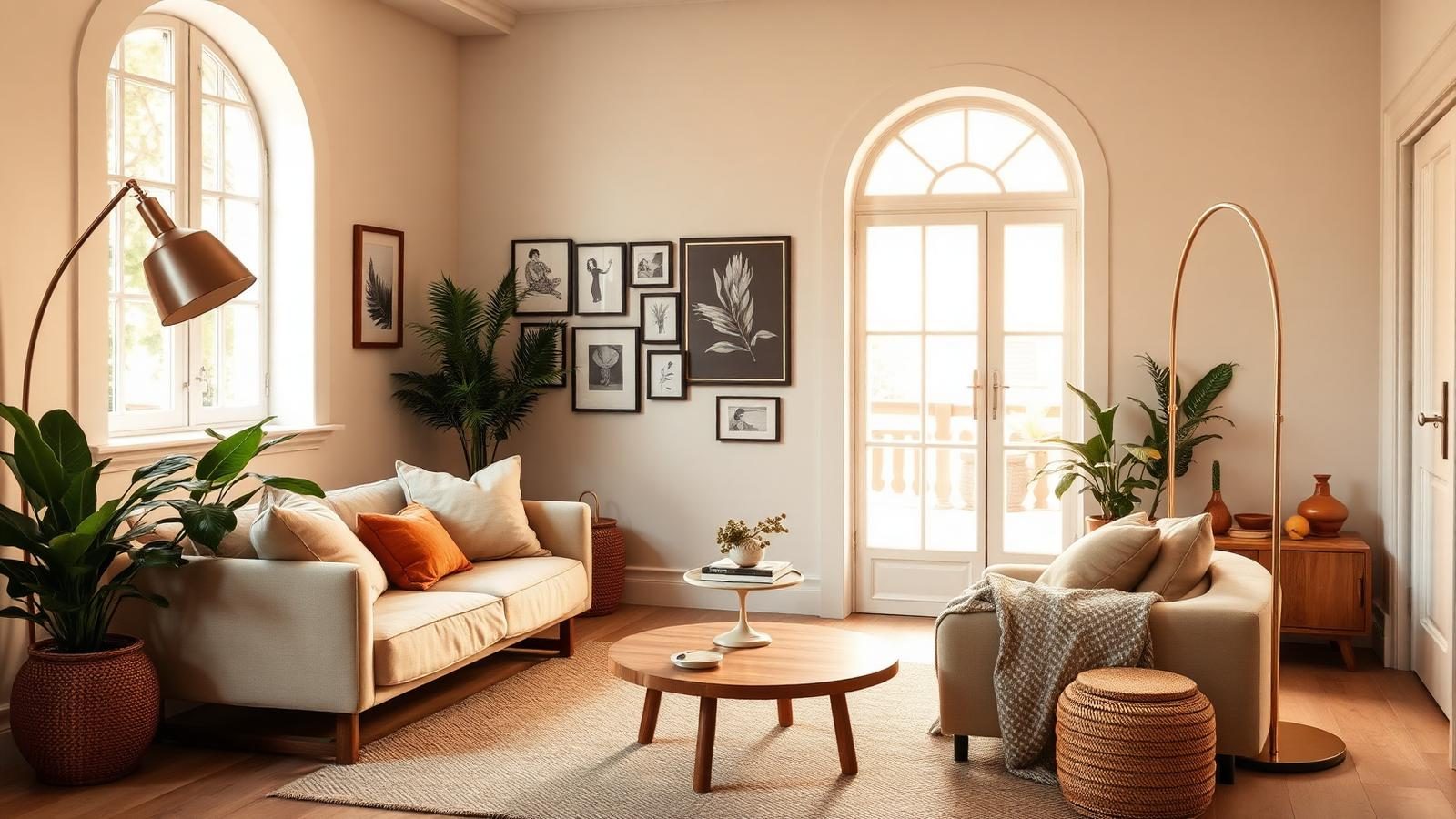
Small living rooms don't fail because the room is small. They fail because people buy the sofa first, then try to make everything else fit around it. By then the traffic pattern is already broken and no amount of styling saves it.
This is the guide we wish more people had before their first apartment. Real layouts, real dimensions, and a way to test the whole thing in your actual room before you spend a cent.
Start with the traffic pattern, not the sofa
Walk the room. Where do you enter? Where do you sit down? Where do you set a cup of tea? That path, from door to sofa to side table, is the traffic pattern. In a small room you get one clean path. Two, if you're careful.
The rule most designers use: leave at least 30 inches of clearance for main walkways and 18 inches between the sofa and the coffee table. In feet: a bit more than a big step, and a bit less than a laptop lid. If the room is 10 by 12, that leaves you a rectangle roughly 6 by 8 for actual seating and storage. Not much. That's why furniture size matters more than furniture style.
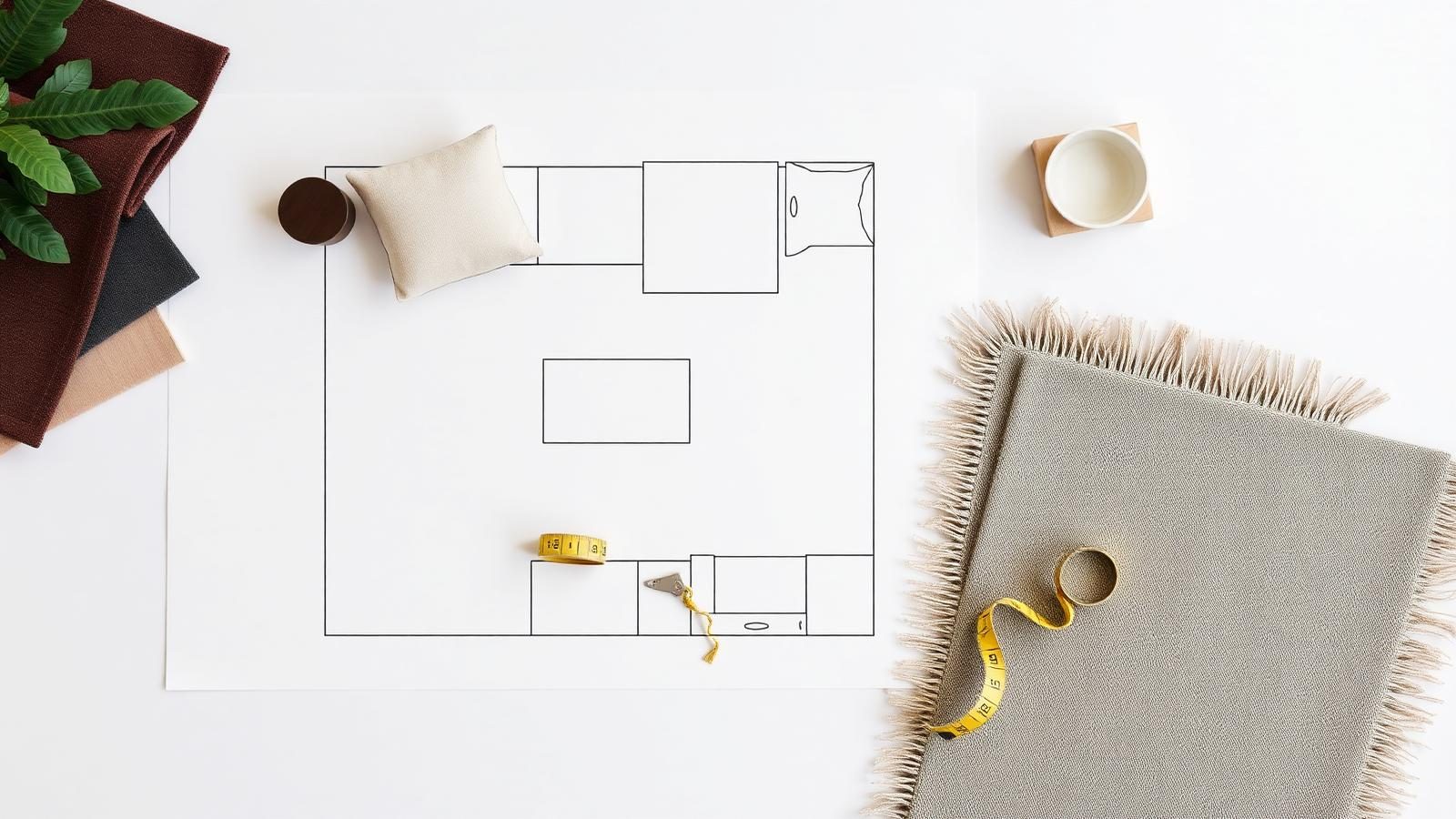
Draw the walk before you draw the sofa. If the walking path has to cross the seating area more than once, the layout is wrong. Every time.
Three layouts that work in almost any small living room
We tested a lot of layouts on real apartments in the 100 to 180 square foot range. Three of them keep working. Everything else is a variation.
1. The floating sofa
Push the sofa away from the wall by about 10 to 14 inches and put a slim console behind it. The console holds a lamp, a book, and a plant. The wall behind the sofa now reads bigger because you've added depth. This is the layout in the hero image above.
Best for: rooms with a window on the long wall and enough length to breathe. A 6-foot sofa needs at least 10 feet of wall.
2. The corner anchor
Tuck a small sectional or a loveseat plus armchair into one corner. Add a round coffee table (round is important, corners eat leg room) and an ottoman that doubles as extra seating. The rest of the room opens up.
Best for: square rooms and rooms with a TV wall that can't be moved.
3. The two-piece huddle
Two matching armchairs and a small sofa, all pulled toward a small center table. No coffee table between them. This layout looks tiny in photos and feels huge in person because everyone is close enough to talk without raising their voice.
Best for: narrow rooms and studios where a full sofa dominates too much.
Pick furniture that shrinks visually
Two pieces of furniture with the same physical footprint can feel completely different. This is the part most guides get wrong.
Rules that hold up:
- Legs beat skirts. A sofa on 6-inch tapered legs looks 30 percent lighter than the same sofa with a boxy base. You can see the floor under it.
- Round tops beat square tops. Round coffee tables have no corners to bruise your shin and read smaller in the room.
- One tall thing per wall. A bookcase or a leaning mirror pulls the eye up. Two tall things on one wall make the room feel crowded.
- Glass, cane, and open shelving read as less mass. Solid oak reads as more.
- Buy the smallest sofa you can actually sit on. Deep sofas (39 inch or more) eat small rooms. 35 to 37 inches deep is the sweet spot.
Color rules for small living rooms
Painting a small room white to make it feel bigger is old advice and it's half wrong. White works when the room gets a lot of natural light. In a north-facing room or a basement, cool white looks like a hospital wing.
What actually works:
- Match the wall color to the largest piece of furniture. If your sofa is oat, paint the walls a warm off-white. The sofa stops being a shape and starts being part of the room.
- Skip the accent wall. In a small room it just chops the space in half. Paint all four walls the same color or paint the ceiling too.
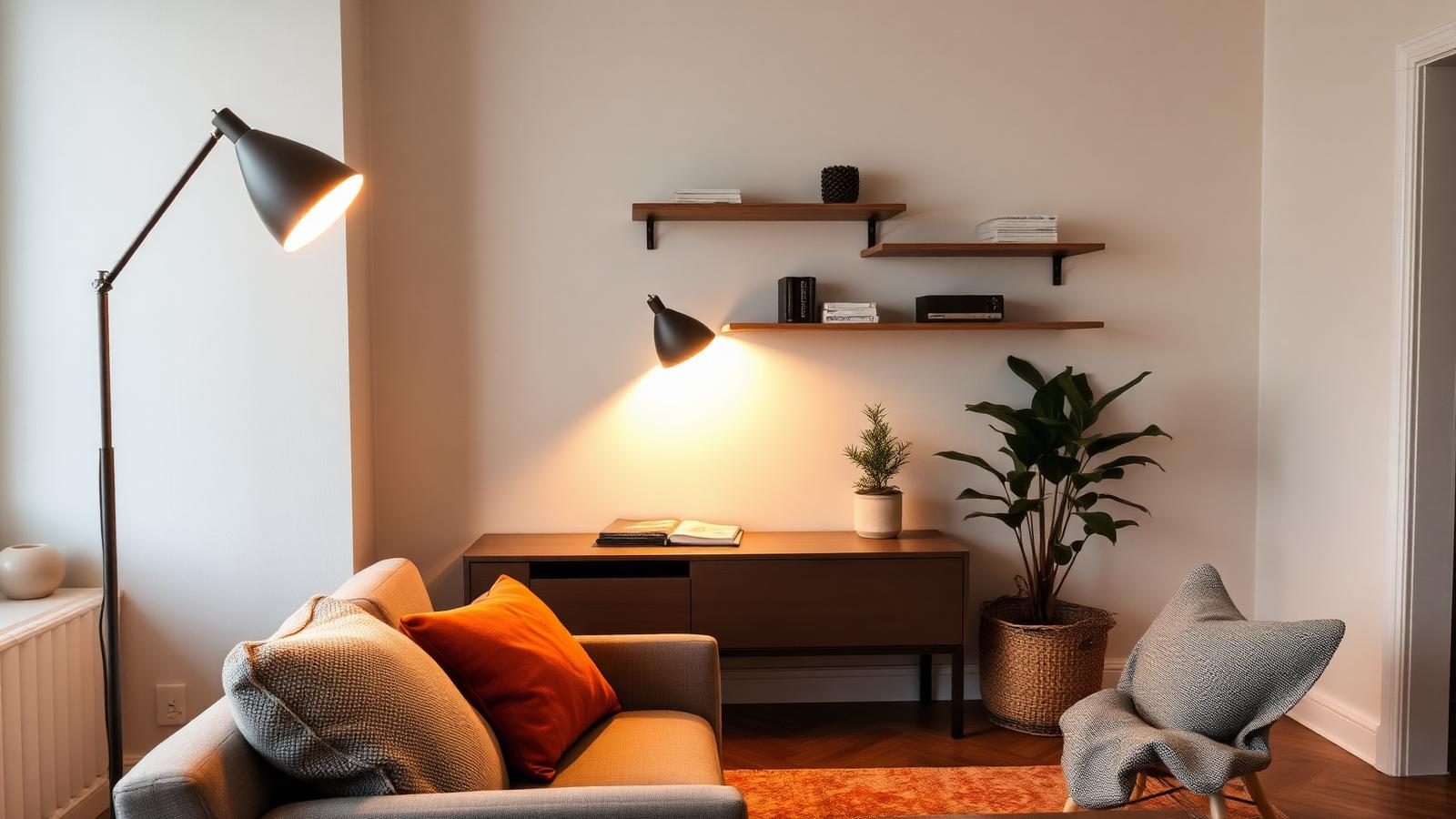
- Save color for the smallest things. A rust throw pillow. A green plant. A brass lamp. Colors read louder in small rooms.
- If you want a bold color, put it on the ceiling. It sounds strange, works every time. Try a soft terracotta or a warm clay.
For a deeper look at palette by style, our full library at Deco Epoch design styles covers modern, Japandi, industrial, and more with example rooms.
Test six versions of your room in 20 seconds
This is where an AI room designer earns its keep. You can look at a floor plan on paper and still not know if the room will feel warm or cold, big or cramped. Take a photo of the room as it is now, pick a style, and generate a redesign. It's free and it's fast.
We use our own AI Interior Designer for this. Upload a photo, choose modern or Japandi or bohemian, set a rough budget, and get back a photoreal version of the same room. Try 4 or 5 combinations. You'll spot the one that works within a minute.
For a full floor plan with walls and dimensions, our free CAD tool lets you sketch the room, drop in furniture, and see it rendered in 3D. Useful before you buy anything over $500.
What a small living room actually costs to redo
Rough numbers from what we see in the US market in 2026. Regional prices vary a lot. For a country-by-country estimate, our budget planner will give you numbers for your city.
| Refresh level | Typical spend | What you get |
|---|---|---|
| Weekend refresh | $200 to $600 | New pillows, throw, small rug, a lamp, and paint |
| Furniture swap | $1,500 to $3,500 | New sofa, coffee table, side table, rug, and lighting |
| Full redesign | $4,000 to $9,000 | Paint, all furniture, custom shelving, window treatments |
You don't have to do it all at once. Most rooms improve 80 percent with three moves: better lighting, a rug that fills the seating area, and paint.
Where to start today
Pick one of the three layouts above. Sketch it on paper with real dimensions. Take a photo of the room and drop it into the AI Interior Designer. Try three style options. Save the one you like and use it as your shopping list.
The whole exercise takes about 30 minutes and it's free. That's less time than choosing a paint chip at the store.
Frequently asked questions
How small is too small for a full sofa?+
Under about 9 feet of open wall, a full sofa starts to dominate. Use a loveseat (60 inch) or a small 2-seater (72 inch) instead. If the wall is under 7 feet, go with two armchairs instead.
Should I use a rug in a small living room?+
Yes, and make it bigger than you think. The front legs of every seat should sit on the rug. A rug that's too small makes the room look like it's floating in fragments.
What color furniture makes a small room look bigger?+
Furniture that matches your wall color, not furniture that contrasts with it. Contrast breaks the room into shapes. Matching lets the eye run smoothly from wall to seat.
Where should I put the TV in a small living room?+
Wall mount it. A media console eats 12 to 18 inches of floor depth. Mounted TVs give you back that space and lift the eye, which makes the ceiling read taller.
Can AI really design a room from just a photo?+
Yes. Modern AI room design tools take a single photo, detect the walls, floor, and light direction, and generate a redesign with new furniture, materials, and lighting. Our AI Interior Designer does this in about 20 seconds and it's free to try.
Try it free
See it in your room in 20 seconds
Upload a photo, pick a style, and get a photoreal redesign from the Deco Epoch AI Interior Designer. No login, no paywall.
Related articles
A complete guide to home design using AI tools
AI will not design your house for you. It will let you test fifty ideas in an afternoon, which is the part that used to cost money. Here is the workflow I actually use on client projects.
How to design a modern home office with AI
Most home offices are a spare bedroom with a desk in it. That's why they don't help you focus. Here's how to design a real one, with AI doing most of the work.
Bedroom lighting ideas that make small rooms feel bigger
Small bedrooms don't need more light. They need light in the right layers. Here's how to fix a cramped, flat-lit bedroom with three fixtures and one bulb spec change.